Weather Tone
- 3.9
- Rating
- 500.00K
- Installs
- Free
- Price
 Analysis by App-foxy
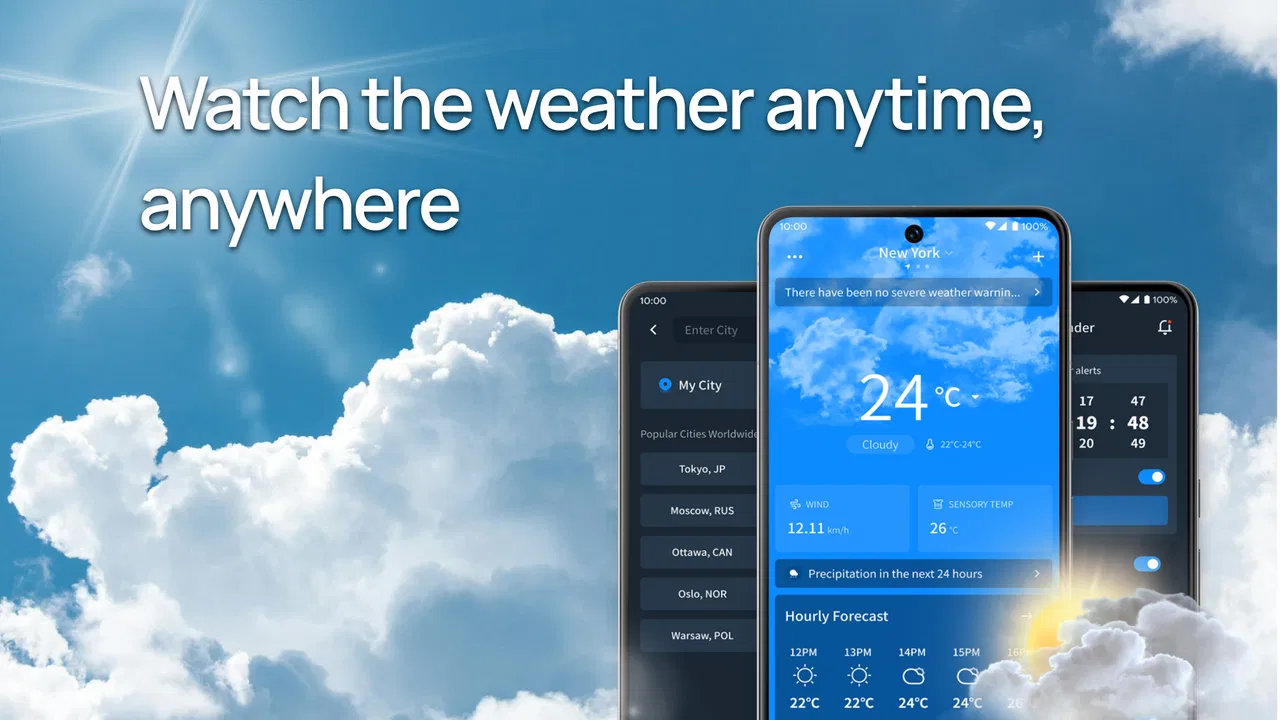
Weather apps are easy to overlook until you need one at the exact moment conditions change. Weather Tone takes a quieter approach, presenting itself as a thoughtful weather companion rather than trying to become an all-purpose dashboard. I found that positioning useful because it sets a different expectation: this is an app to consult during ordinary decisions, not necessarily a replacement for every detailed forecasting tool on your phone.
That distinction matters when choosing a weather app. Some people want radar layers, severe-weather alerts, long-range charts, and a wall of technical readings. Others mainly want a quick sense of what the day may feel like before leaving home. Weather Tone sits closer to the second group. Its store short description is simply “Weather Tone,” while its broader summary describes it as a thoughtful weather companion. Those few words suggest an experience centered on mood and day-to-day awareness, although they should not be mistaken for a promise of specialist meteorological depth.
I reviewed it as a free weather app from TrueMe Global, and the most important question for me was not whether it looked appealing in a calm moment. It was whether the experience remained useful when I was moving between places, relying on mobile data, or dealing with a forecast that needed refreshing. Connectivity is part of the practical story here, because weather information is only helpful when the app can obtain current information and present it at the right time.
You May Also Like

 Pandora - Music & Podcasts
Pandora’s Music Is Easy to Start, but Harder to Recover
Pandora’s strength is its low-effort path from a seed to a station. Its weak spot is how much confidence it asks you to place in connection, setup, and quiet recovery.

 AccuWeather: Weather Radar
AccuWeather Review: A Quick, Clear Forecast for Everyday Decisions
For everyday plans, the best forecast is the one you can understand quickly. AccuWeather makes rain timing, radar, and local conditions easy to act on, with a few trade-offs.

 Hill Climb Racing
Why Hill Climb Racing Still Turns Crashes Into One More Run
A tiny car, a bumpy hill and one more upgrade: Hill Climb Racing keeps resurfacing because its simple chaos makes every near-miss feel personal.

 AliExpress - Shopping App
AliExpress Makes Global Shopping Feel Personal, but Shoppers Bear the Risk
AliExpress turns a global marketplace into a pocket-sized discovery engine. Its reach is useful, its shopping loop compelling, and its trade-offs easy to miss.

 Lords Mobile: Kingdom Wars
Lords Mobile Is a Kingdom-Building Routine, Not a Quick Match
A case-by-case verdict on the building, battles, device demands, and social commitments that make Lords Mobile rewarding for some players and exhausting for others.

 PDF Scanner app - TapScanner
TapScanner Makes Paperwork Easier to Capture, Check, and Share
TapScanner makes scanning with a phone feel less like a rescue operation and more like a dependable step in getting work done. Its capture tools are useful, though not flawless.
More From Our News Desk
View All News


How Weather Tone feels when the connection is doing the work
A weather app normally depends on a chain of online activity: the phone needs to identify or receive a location, the app needs access to current forecast information, and the result needs to arrive before the user makes a decision. Weather Tone should therefore be approached as a connected companion. I would open it before commuting, walking, shopping, or planning an outdoor appointment, rather than assuming that an earlier screen will always represent the present situation.
This creates a simple but important habit. When I have a stable connection, I can check the app as part of preparing for the day. When I am about to enter a basement, train, rural road, or crowded venue, I would make the check before losing reliable access. That is not a criticism unique to this app; it is the reality of connected weather services. The useful insight is that timing the check matters just as much as remembering to check.
Weather Tone’s restrained identity may appeal to people who dislike the clutter found in larger weather products. A screen that encourages a quick glance can be more practical than a complicated forecast page when I am standing by the door with one hand on my bag. The trade-off is that a calmer presentation can leave less room for the layers and technical context that experienced users expect. If your decisions depend on storm cells, detailed hourly changes, or specialized outdoor readings, you should compare the app with a more advanced service before making it your only source.
I also would not treat a successful opening as proof that every piece of weather information is equally current. A connected weather app can display a usable result while conditions continue to evolve elsewhere. For normal planning, that may be acceptable. For travel through hazardous conditions, mountain activities, boating, or work that depends on precise weather windows, I would verify important decisions with an established specialist source as well.
When a quick check is genuinely useful
One everyday scenario is a short commute with a flexible choice of clothing. I might check Weather Tone while making breakfast, notice that the day calls for a different approach than yesterday, and decide whether to carry an extra layer or alter the time I leave. The value is not in turning the forecast into a scientific report. It is in reducing a small amount of uncertainty before I step outside.
Another useful routine is checking before a brief errand rather than relying on the morning forecast. A forecast that felt adequate several hours earlier may no longer answer the question I have now. Opening the app immediately before leaving gives the connected experience a clear purpose: it becomes a decision checkpoint, not background decoration.
For families, the same approach can help with school runs, playground visits, and short trips. I would still keep the check lightweight and avoid presenting the app as an authority that removes all risk. Weather changes, location accuracy can vary, and a forecast is guidance rather than a guarantee. That balanced mindset makes a simple app more useful, not less.
Using it while moving around
Mobile use is where Weather Tone’s concept makes the most sense. I would use it in short sessions, preferably when I have enough signal to let the app update properly. A phone is often consulted in transitional moments: outside a station, before a walk, beside a parked car, or while deciding whether an outdoor plan is still comfortable. That makes speed and clarity more important than a large collection of settings.
There is also a practical trade-off between location convenience and control. If the app uses the phone’s current location, moving between neighborhoods or cities may make the experience more relevant, but it also means I would pay attention to which place the app is showing before acting on it. A forecast for the previous location is not useful simply because the screen opened successfully. I would make location awareness part of the check, especially when crossing a city boundary or traveling.
For travelers, I would use Weather Tone as a quick orientation tool after arriving somewhere new, not as the sole preparation method for an entire trip. Before leaving home, I would check the destination and think about the connection I am likely to have there. In a busy urban area, that may be straightforward. In a remote area or during transport, I would avoid depending on a last-second refresh.
The app’s Everyone content rating also makes it approachable for shared household use. A parent can introduce it as a simple way to discuss the day’s conditions with a child, while an older relative can use it for routine planning without needing a complicated weather interface. That broad accessibility is helpful, though it does not change the need for adults to interpret serious weather situations responsibly.
What happens when the network is unreliable
The most important limitation in a connectivity-focused review is recovery. If a weather app cannot retrieve current information, the user needs to know how to respond rather than repeatedly tapping the same screen. With Weather Tone, I would begin by checking whether the phone has a usable connection, then retry once in a place with stronger service. If the result still does not appear or seems outdated, I would postpone a nonessential decision or consult another trusted source.
I would not build a routine around assuming that the app can provide a complete forecast without a connection. The product information presents Weather Tone as a weather companion, but it does not establish offline forecasting as a feature. The sensible workflow is therefore to refresh while connected and avoid treating an old display as a live update. That small discipline prevents one of the most common mistakes people make with any online weather tool.
Recovery also means checking the context after the app returns. If I opened it during a train journey, for example, the phone may have shifted location while the connection was weak. Once the app responds, I would confirm that the displayed place matches where I actually am. This is a more useful habit than assuming that a recovered screen is automatically correct for the current moment.
For urgent weather concerns, I would use a layered approach. Weather Tone can serve as the convenient first glance, but official emergency notices or specialized weather services should take priority when warnings affect safety. The app’s simple role can still be valuable; it just should not be stretched beyond what a general companion is designed to do.
Keeping mobile data use sensible
Because the app is free, it is tempting to open it frequently without thinking about the connection behind each check. I would still use a measured routine. Check once before leaving, refresh when circumstances change, and avoid repeatedly reopening the app simply to watch a forecast that is unlikely to change minute by minute. This is especially sensible when using a limited mobile plan or traveling with roaming enabled.
A useful data-conscious workflow is to separate planning checks from reassurance checks. A planning check happens before a commute, walk, or appointment and deserves a fresh look. A reassurance check is opening the app again moments later without a new decision to make. The first has clear value; the second may add little while consuming another connection opportunity. Weather Tone’s quick-companion positioning works best when I use it for decisions rather than idle monitoring.
I would also avoid assuming that a visually simple weather screen means no network activity is involved. A clean interface can still depend on current requests behind the scenes. Without making claims about the app’s technical data behavior, the safest personal rule is to use it normally on Wi-Fi when convenient and reserve mobile refreshes for moments where the information will actually change what I do.
Travel adds another layer of caution. Before entering an area with expensive or unreliable connectivity, I would check the weather while service is strong and carry a backup plan for important activities. That does not mean treating the app as unusable; it means matching the app to the conditions in which it can be most dependable. A connected companion is strongest when the user respects the connection it needs.
Who should choose it, and who should look elsewhere
I can recommend Weather Tone to someone who wants a free, approachable weather app for ordinary daily decisions and prefers a less intimidating experience. It may suit a student checking conditions before walking to class, a commuter deciding what to wear, or a household looking for a straightforward shared reference. The developer, TrueMe Global, presents it as an app rather than a specialized professional instrument, and that is how I would position it in my own phone.
I would be more cautious about recommending it as the only weather tool for hikers, cyclists planning long routes, event organizers, farmers, pilots, boaters, or anyone working around severe-weather risk. Those users often need detailed maps, warning systems, historical context, or specialized measurements. A calm companion can complement those tools, but it should not replace them when the cost of an inaccurate or delayed decision is high.
I would also skip it if my main reason for installing a weather app is to explore deep forecast data. People who enjoy comparing hourly curves, radar movement, precipitation timing, and multiple model outputs may find a specialist alternative more satisfying. The choice is not about which style is universally better. It is about whether I want a quick interpretation for daily life or a technical workspace for weather analysis.
The current version is 1.1.0, and the app is available at no cost. Its listing shows over ten thousand installs and an average rating of zero, so I would not use the rating figure as meaningful evidence of broad user satisfaction. Instead, I would judge it by whether its simpler approach fits my routine. The age rating is Everyone, which supports its general-audience character, while the minimum operating-system requirement is Android 6.0 or later. Those details make it accessible to many older Android phones, although actual comfort will still depend on the device and connection.
My practical routine after using it
If I kept Weather Tone installed, I would place it where I can reach it before leaving home and use it at three deliberate points: during morning planning, before a change of location, and before an outdoor activity that matters. I would not leave it open all day expecting it to solve every weather question automatically. That routine keeps the app useful without turning a small forecast check into constant phone maintenance.
When the connection is strong, I would refresh and read the result in the context of my actual destination. If I am moving, I would confirm the location. If service is weak, I would avoid making a confident decision from an unchanged screen. If the forecast affects safety, I would add an official or specialist source. These steps are simple, but they are the difference between using a weather app thoughtfully and treating any displayed forecast as a promise.
I also like the idea of judging the app after a week of real routines rather than after one attractive glance. Use it before commuting, during a shopping trip, and ahead of a walk. Notice whether the presentation helps you decide faster or whether you keep wanting more detail. That test reveals the central trade-off better than a feature checklist: Weather Tone is most convincing when simplicity reduces friction, and least convincing when simplicity feels like missing context.
My connectivity verdict
Weather Tone is best understood as a lightweight, connected weather companion for everyday choices. I appreciate that its identity does not push me toward constant analysis. A quick check before leaving can be enough for clothing, errands, and casual outdoor plans, and the free price lowers the barrier to trying that style of weather app.
At the same time, I would keep my expectations grounded. The experience depends on sensible connection habits: check while service is available, confirm the location when moving, and do not assume that a previously displayed forecast is current. For important or hazardous conditions, I would pair it with a more authoritative source. That is not a flaw in using a simple app; it is responsible tool selection.
My final recommendation is therefore selective rather than universal. Install it if you want an uncomplicated way to orient yourself before ordinary daily activities and value a calmer alternative to crowded weather dashboards. Choose another app, or use one alongside it, if your decisions require technical detail, specialized warnings, or dependable planning in places where connectivity is uncertain. For the right user, Weather Tone can earn a useful place in a mobile routine precisely because it asks to be consulted, not endlessly studied.
FAQs for Weather Tone
01What is Weather Tone, and how does it work?
Weather Tone is a unique weather app that provides real-time weather updates along with ambient soundscapes that match the current conditions. It works by using your location to deliver precise weather information while playing sounds like rain, wind, or sunshine to enhance your experience. This feature aims to make weather updates more immersive and relaxing.
02Is Weather Tone available for both Android and iOS devices?
Yes, Weather Tone is available for both Android and iOS platforms. You can download it from the Google Play Store for Android devices and the Apple App Store for iOS devices. Make sure your device meets the necessary system requirements for optimal performance and compatibility.
03Does Weather Tone consume a lot of battery and data?
Weather Tone is designed to be efficient in terms of battery and data usage. The app continuously strives to optimize performance by minimizing background activity and data consumption. However, using GPS for real-time location updates and streaming soundscapes may affect battery life, so it's advisable to monitor your usage.
04Can I customize the soundscapes in Weather Tone?
Yes, Weather Tone offers customization options for soundscapes. Users can choose from a variety of ambient sounds to match their preferences or mute them entirely if desired. The app allows for a personalized weather experience by letting you adjust sound levels and select specific themes that suit your mood or environment.
05Is Weather Tone free to use, or does it have in-app purchases?
Weather Tone is free to download and use, but it offers in-app purchases for additional features and premium content. These may include advanced soundscapes, ad-free experiences, and exclusive weather insights. Users can enjoy the basic features without any cost, but optional purchases can enhance the overall experience.
Pros
- Intuitive user interface for easy navigation.
- Provides real-time weather updates.
- Customizable alerts for severe weather.
- Supports multiple locations for travel plans.
- Minimal battery consumption.
Cons
- Limited free features without subscription.
- Ads can be intrusive at times.
- Occasional loading delays in rural areas.
- Requires internet connection for updates.
- Lacks detailed historical weather data.

Weather Tone
Gallery